


Every day
It straightens the edge
Each time you cut, the fine edge of the blade bends a little to one side. The knife cuts less well, but the edge is not worn: it is only out of line. A few light strokes down the steel bring it back into line.
In stock ·Free UK delivery
Couldn't load pickup availability
A honing steel does not sharpen a blunt knife. It straightens an edge that is already sharp, so you sharpen less often. For a blunt knife, start with one of our rolling sharpeners.
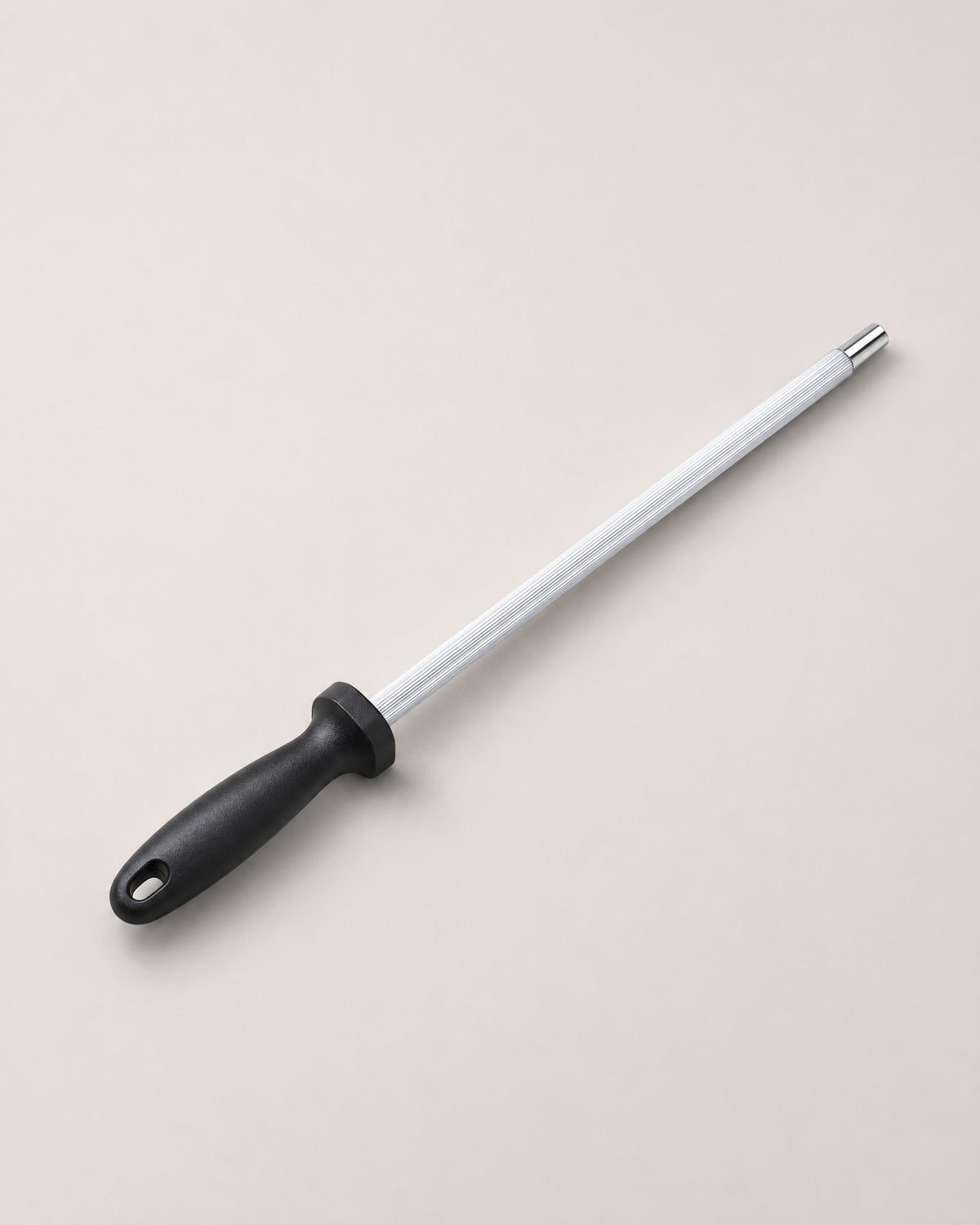
With use, the fine edge of a knife bends to one side. A few light strokes down the ridged steel rod bring it back into line. The steel does not grind the blade away, so you can use it every time you cook.
In the box: one honing steel, 10 in (25 cm), with a black handle, a hand guard and a hanging hole.
Good to know: for everyday steel kitchen knives. Very hard, thin blades are better kept on a ceramic rod. Not for ceramic knives. Wipe it clean after use and keep it out of the dishwasher.
Delivery: free to UK addresses, in 7 to 10 working days. Delivery details.
Returns: you have 30 days from delivery to send it back, unused. Returns and refunds.
Guarantee: 2 years, in addition to your statutory rights.
1. Wash and dry the knife.
2. Stand the steel upright, with its tip on a chopping board or a folded cloth. Grip the handle and keep your fingers above the guard.
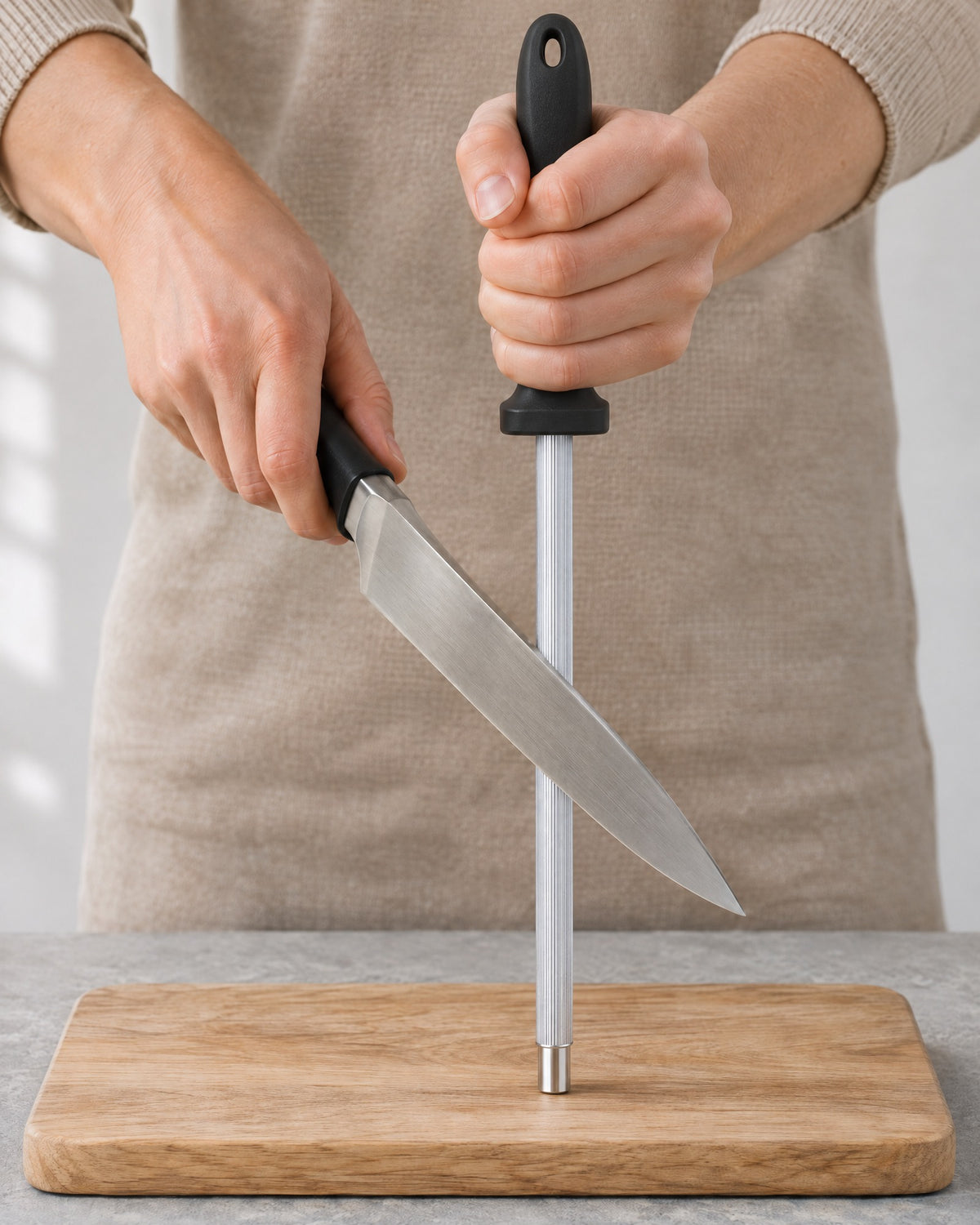
3. Rest the heel of the blade against the top of the steel, at about 20°.
4. Draw the knife down the steel in one smooth stroke, from heel to tip. Use light pressure.
5. Do the same on the other side of the steel. Alternate sides, five to ten light strokes on each side.
6. Wipe the blade and the steel with a clean cloth.
To check, slice a sheet of paper held upright. A clean cut means the edge is back in line. If the blade catches or tears the paper, the knife needs sharpening, not honing.
Keep your fingers out of the path of the blade.
A question before or after you order? Write to us and we will get back to you.


How to use
Stand the steel on a board and draw the knife down it, a few light strokes on each side.
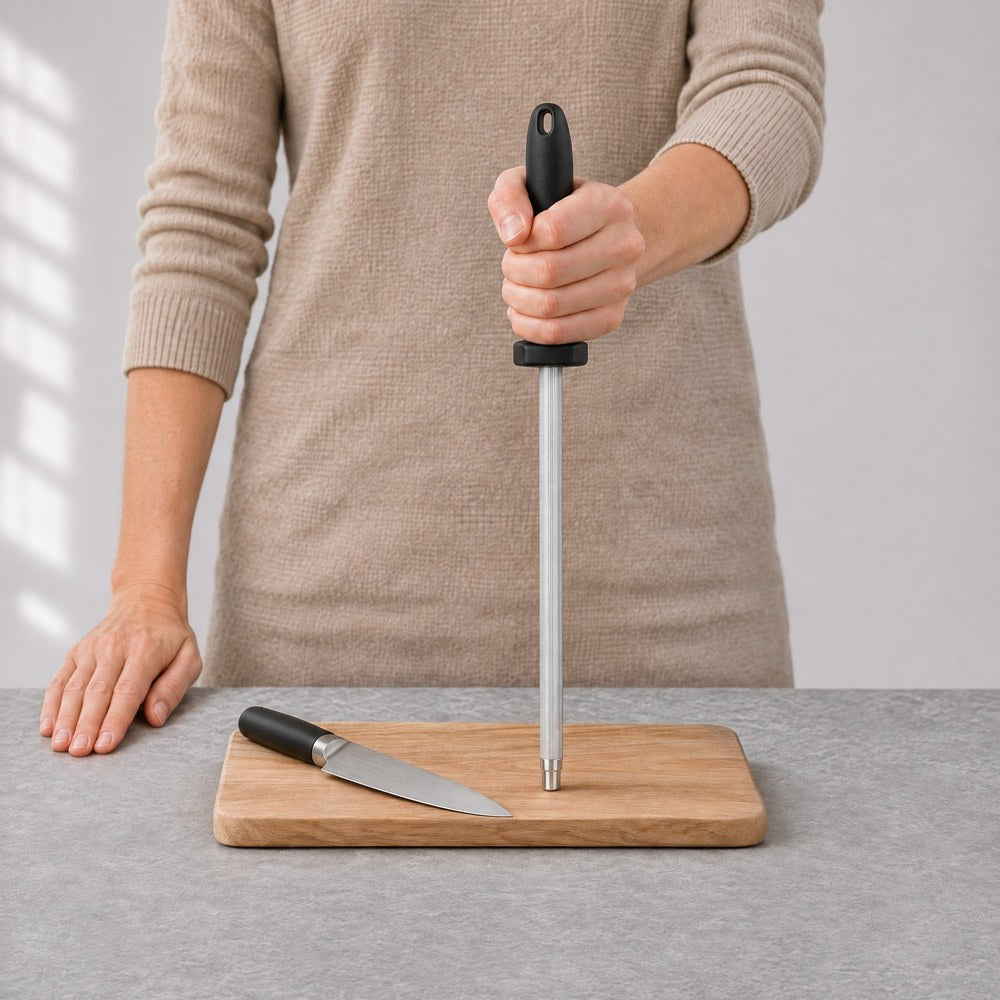
Hold the steel upright, with its tip on a chopping board or a folded cloth.

Draw the blade down from heel to tip, at about 20°, then do the other side.
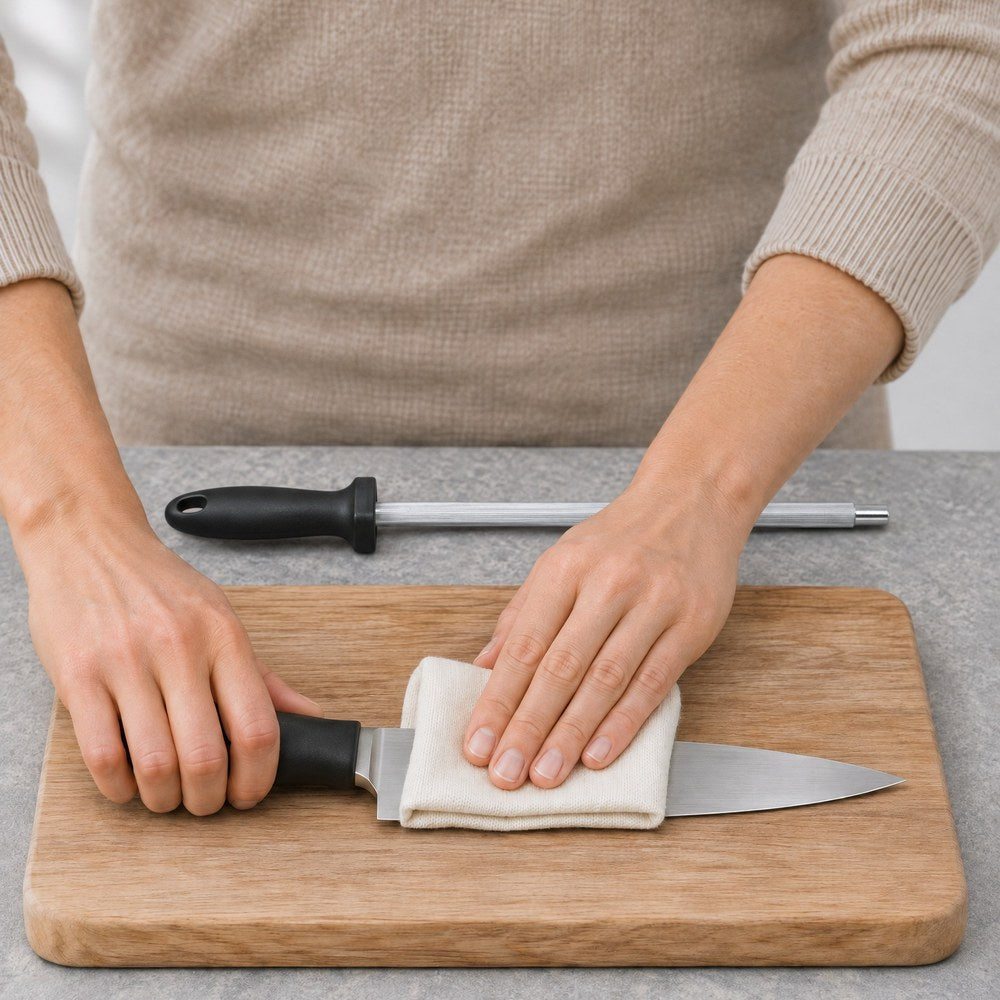
Wipe the blade clean before you cook with it.
Honing, not sharpening
A honing steel does not sharpen a blunt knife. It straightens an edge that is already sharp, so you sharpen less often.
Every day
Each time you cut, the fine edge of the blade bends a little to one side. The knife cuts less well, but the edge is not worn: it is only out of line. A few light strokes down the steel bring it back into line.

Why hone

The details

Which rod
This steel straightens the edge and does not grind it away, so you can use it every day on everyday kitchen knives. The Ceramic Honing Rod is harder and very fine: it also smooths the edge lightly and suits harder steel knives, but it can break if dropped. Blunt knife? Neither will fix it: use a rolling sharpener.
No. It straightens the fine edge, which bends a little each time you cut, but it does not make a new one. For a blunt knife, use one of our rolling sharpeners first.
Stand the steel upright with its tip on a chopping board or a folded cloth, and keep your fingers above the guard. Draw the knife down from heel to tip at about 20°, with light pressure. Alternate sides.
The Honing Steel straightens the edge and does not grind it away, so it suits everyday knives and daily use. The Ceramic Honing Rod is harder and very fine: it also smooths the edge lightly and suits harder steel knives. Neither is for ceramic knives.
As often as you like: a few light strokes before or after you cook keep the edge in line. When the steel no longer brings the edge back, it is time to sharpen.
Wipe it with a dry cloth after use and hang it up by the hole in the handle. Keep it out of the dishwasher.
Delivery is free in the UK and takes 7 to 10 working days. If you change your mind, you have 30 days to send it back unused, and it comes with a 2-year guarantee.

Honing Steel
£25.00