What blunt means
Seen from the tip, a sharp edge ends in a fine point. A blunt one is rounded, so it slides and squashes before it cuts.
The sharpening guide
What blunt really means, which angle and which grit to use, and how to keep an edge once you have it.
Start here
A knife does not wear out. Its edge rounds over with use, and a rounded edge crushes instead of cutting.
Seen from the tip, a sharp edge ends in a fine point. A blunt one is rounded, so it slides and squashes before it cuts.
Hold a sheet of paper by one corner and slice down: a sharp knife cuts it cleanly, a blunt one tears it. Or try a ripe tomato: the blade should go through the skin with no pressure.
Two different jobs
With use, the very tip of the edge bends to one side. A few strokes on a honing rod stand it back up. Do it often: once a week, or before a big cook.
When honing no longer helps, the edge is worn. Sharpening removes a little steel to cut a new one. For most home cooks, that is every few months.
The two numbers
The angle is measured on each side of the blade. 20° gives a strong edge for everyday knives. 15° gives a finer edge for thin slicing knives. What matters most is holding it steady.
The lower the number, the coarser the surface. 240 to 400 repairs a damaged or very blunt edge. 1000 sharpens. 3000 and above refine and polish. Always work from coarse to fine.
Choose your tool
| Feature | Rolling sharpener | Whetstone | Honing rod |
|---|---|---|---|
| What it does | Sharpens | Sharpens | Straightens the edge |
| Skill needed | None: the block holds the angle | Some practice | A little practice |
| Time per knife | A few minutes | 10 to 20 minutes | Under a minute |
| Water | No | Yes, soak the stone first | No |
| How often | Every few months | Every few months | Every week |
Method 1
The easiest way to start: the block holds the angle, you roll.

Rest the blade against the magnetic block, on the 15° or the 20° side.

Roll the disc along the edge, then turn the knife and do the other side.

Your knife cuts cleanly again.
Method 2
More to learn, and the finest edge once you have the knack.
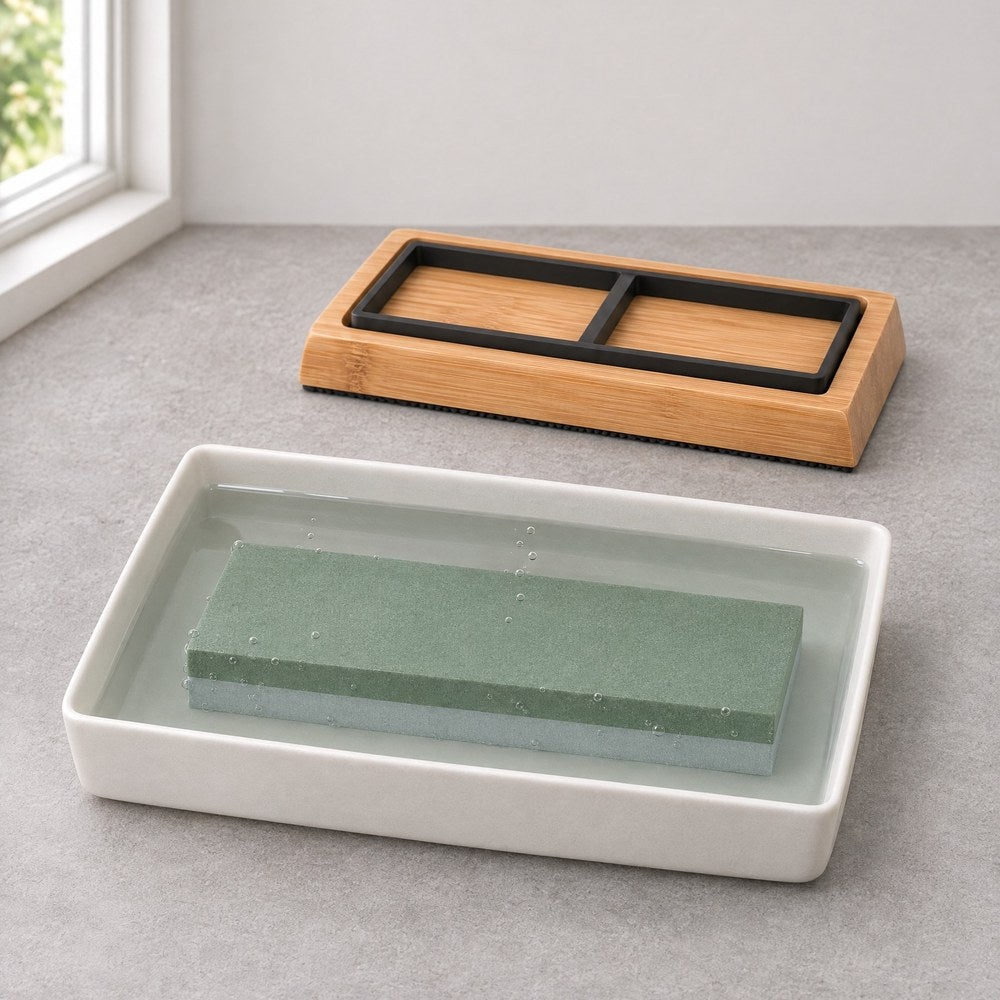
Leave the stone in water for 5 to 10 minutes.
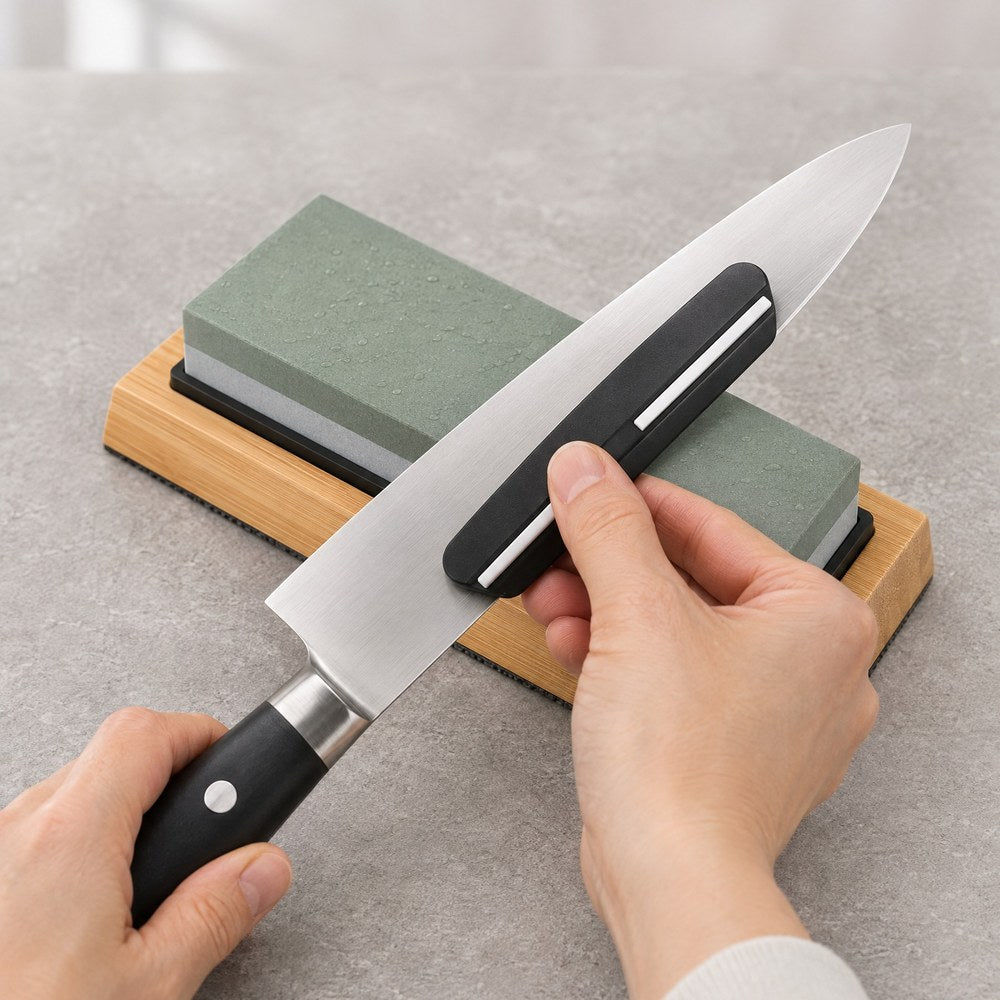
Clip the guide onto the spine of the knife and rest the edge on the stone.

Push the edge along the stone, then repeat on each finer grit.
Method 3
Not sharpening, but the quick weekly habit that keeps an edge going.
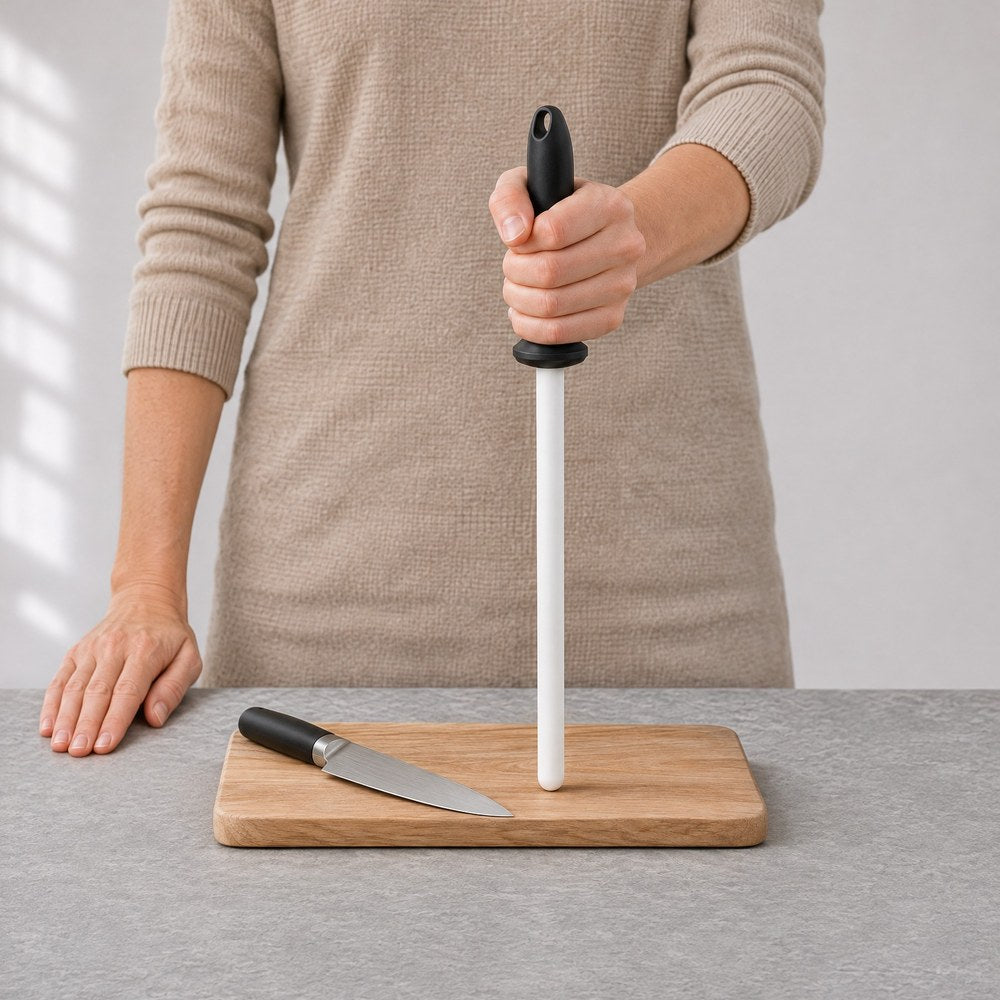
Hold the rod upright, with its tip on a chopping board or a folded cloth.
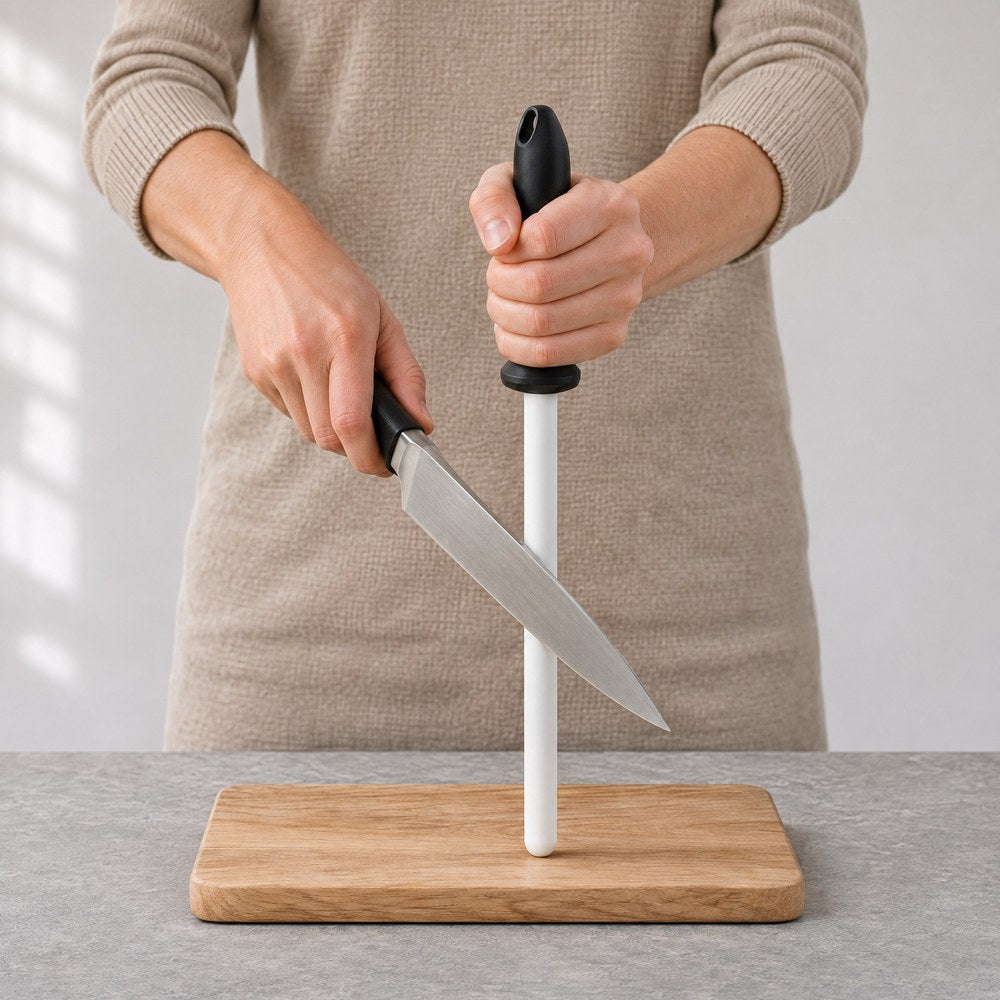
Draw the blade down from heel to tip, at about 20°, then do the other side.

Wipe the blade clean before you cook with it.

Care


